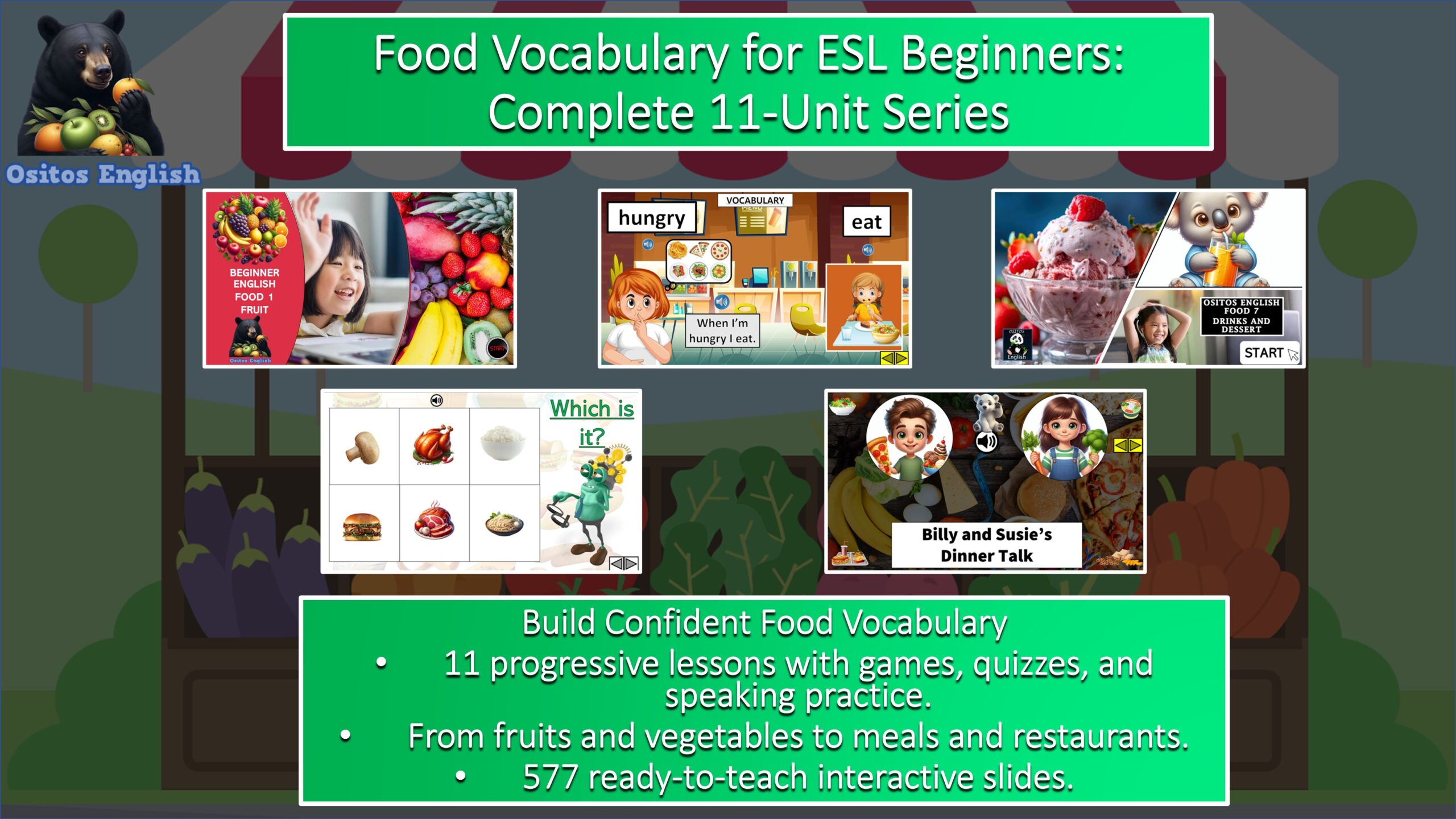








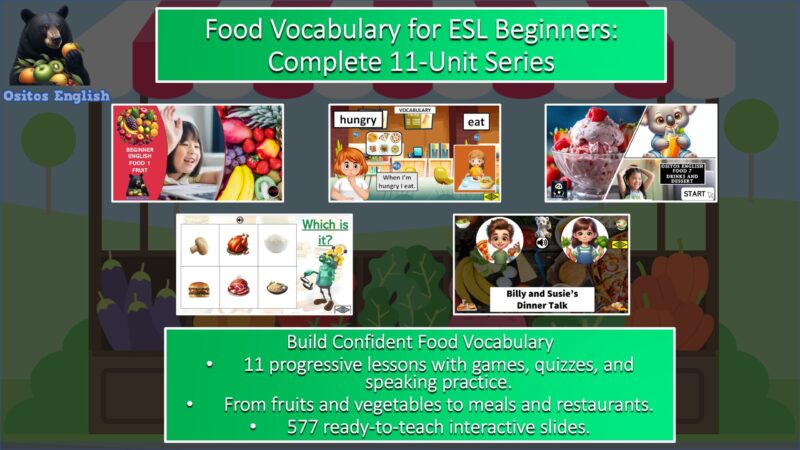

This interactive PowerPoint collection is the entire Ositos English Food Vocabulary Series — an 11-unit collection designed to teach beginner-level English learners (especially children) essential food-related vocabulary in a fun, structured, and visually rich way. Whether you’re a teacher working online or in the classroom, or a parent supporting your child’s English learning at home, these lessons offer a ready-made path to confident vocabulary use.
Unit 1
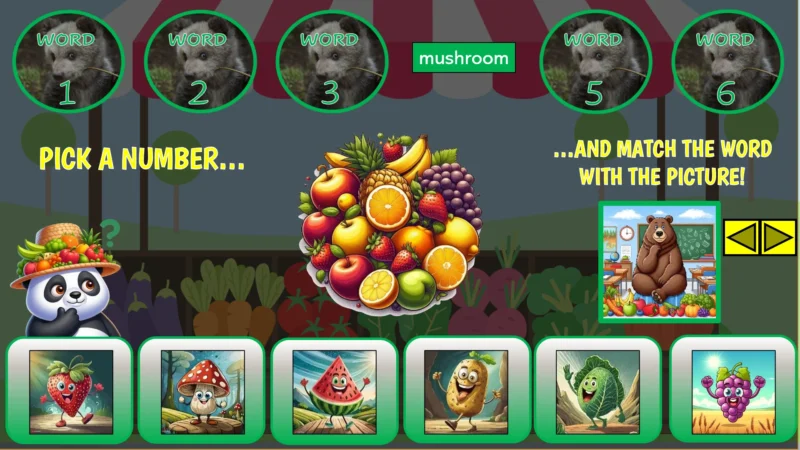
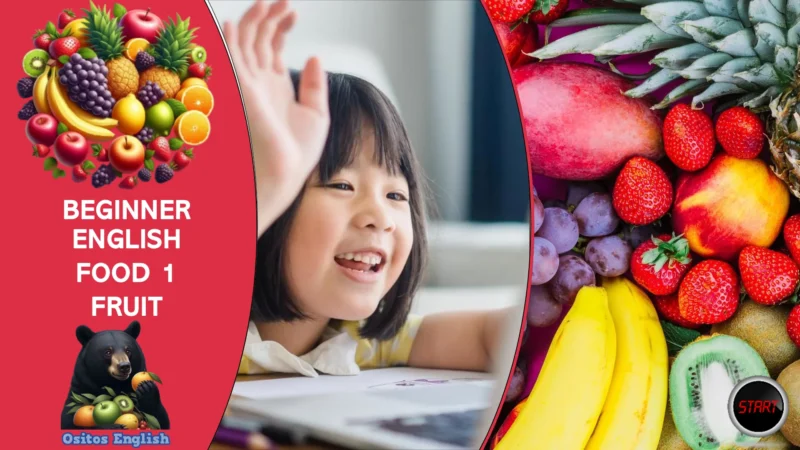
In Unit 1, learners will meet ten fruits—five at a time—through engaging visuals, simple pronunciation practice, and fun games. Kids will not only learn to say and spell these words, they’ll also learn to identify them when shown in real-life images and in mixed groups of other foods.
Unit 2
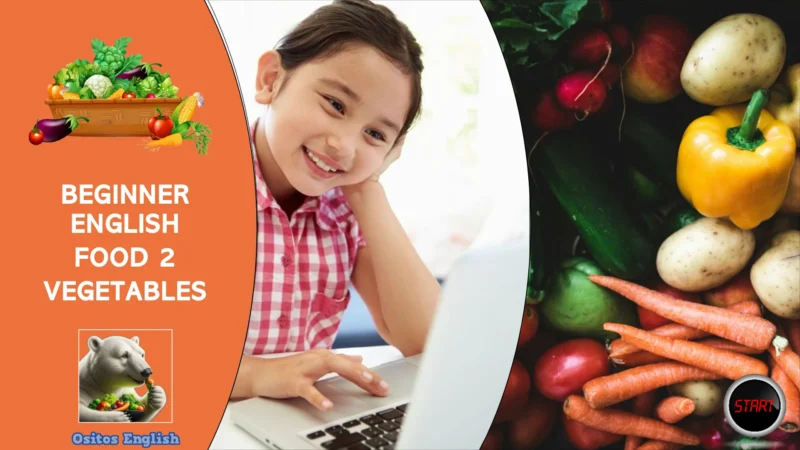
In this lesson, students discover 10 common vegetables, introduced in two manageable groups. Through pronunciation practice, interactive spelling and picture quizzes, and visual identification tasks, learners become confident in naming and recognizing each vegetable—even when they’re part of a larger scene. The lesson finishes with confidence-building speaking practice using the new vocabulary.
Unit 3
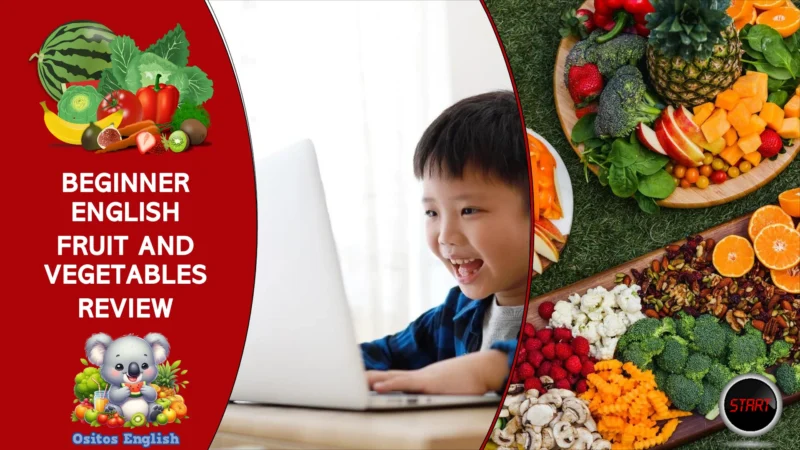
Unit 3 reinforces the fruits and vegetables learned in the first two lessons with fun, interactive challenges. Students “feed the monster” the correct items, sharpen their spelling, and practice writing key words. A variety of engaging games and quizzes help ensure strong retention while keeping the learning lively.
Unit 4
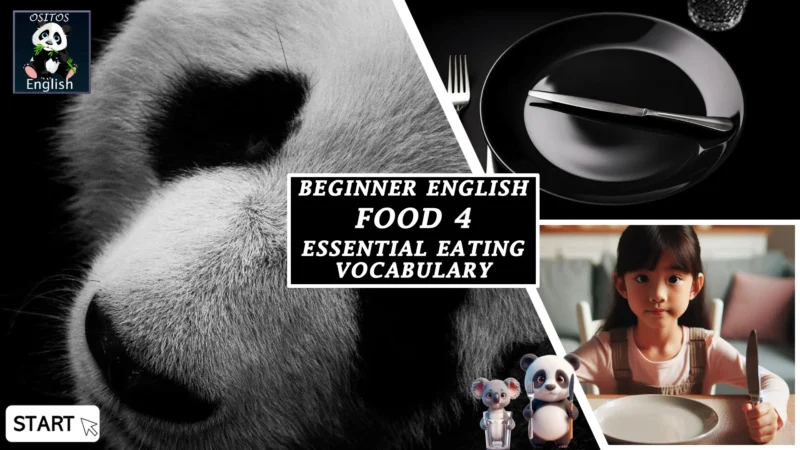
Students learn useful everyday words like “hungry,” “thirsty,” “eat,” and “cook,” and then move on to asking and answering simple questions like “Do you like apples?” They’re also introduced to common utensils and tableware like cups and plates, practicing their new vocabulary through picture-based quizzes and matching games. This unit starts to build real-life conversational patterns with a food focus.
Unit 5
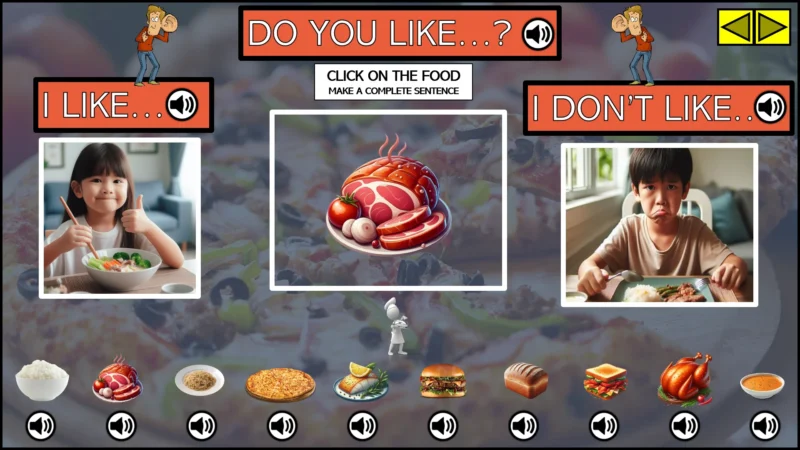
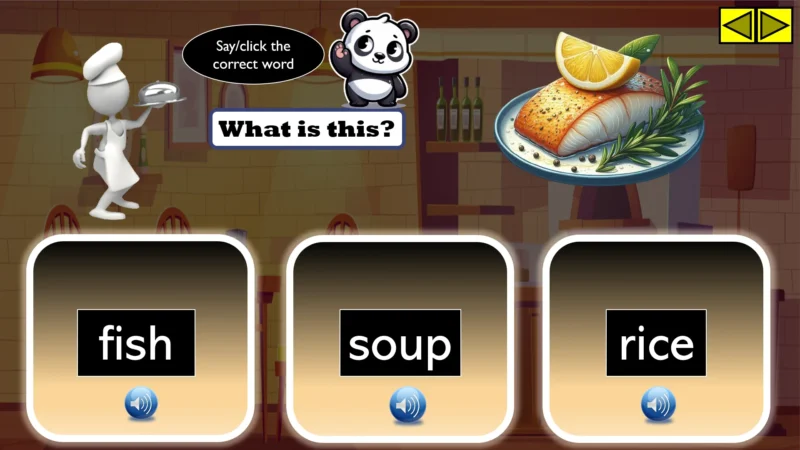
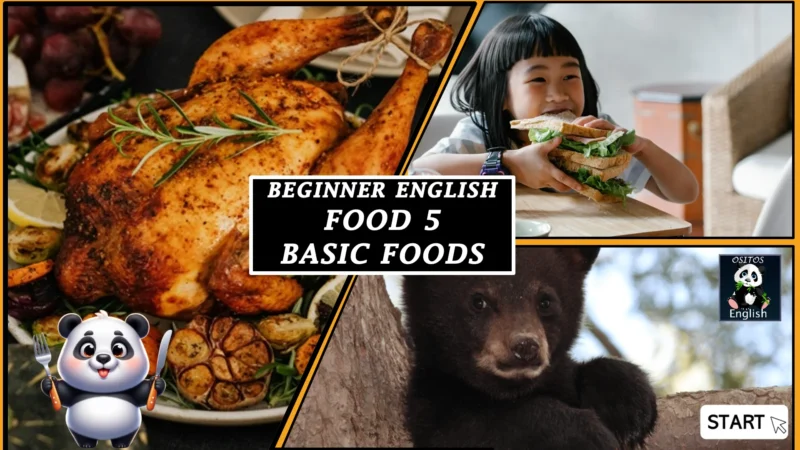
Students expand their vocabulary with 10 common foods, practicing pronunciation and recognition through pictures, games, and spelling challenges. They continue to build sentence patterns using “Do you like…?” and reinforce confident speaking around familiar food vocabulary.
Unit 6
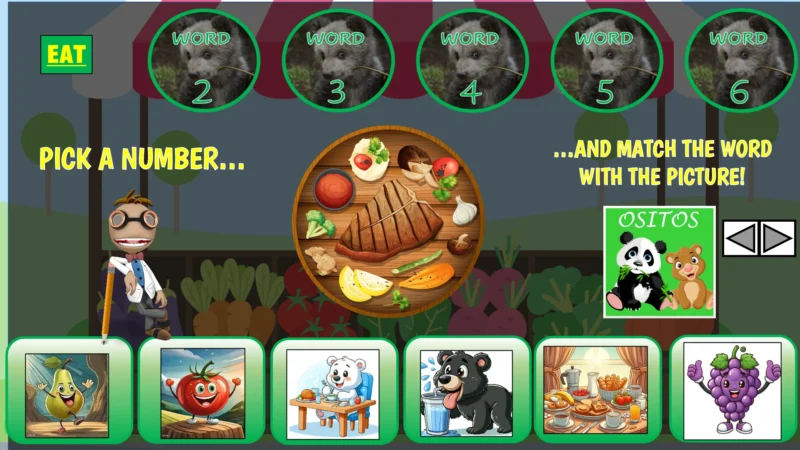
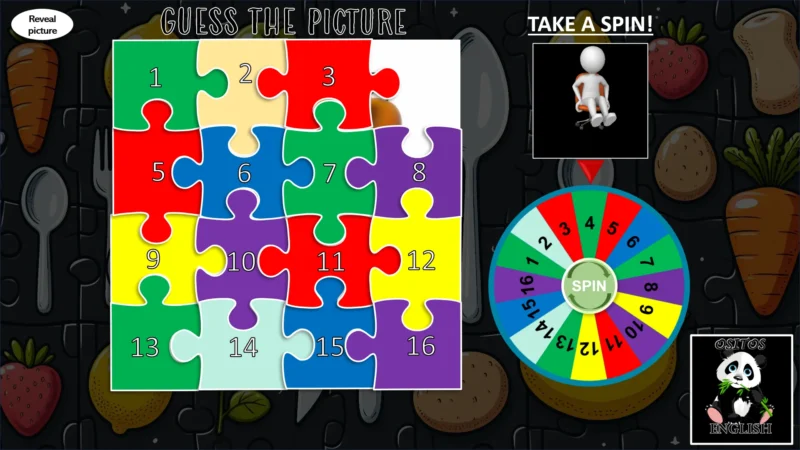
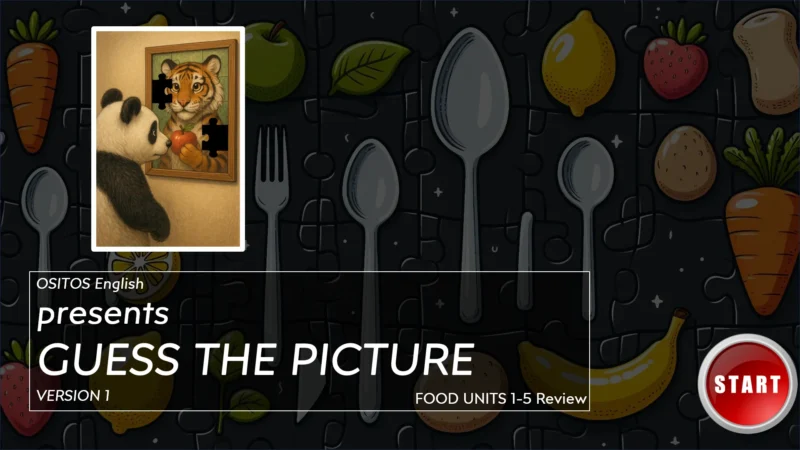
Each version of this lively “picture reveal” game uses vocabulary from Units 1–5. Students answer questions to uncover parts of a hidden image—usually a silly animal with food! The questions remain the same across both versions, but each has a different image for guessing. It’s a fun way to test knowledge and spark conversation in a low-pressure format.
Unit 7
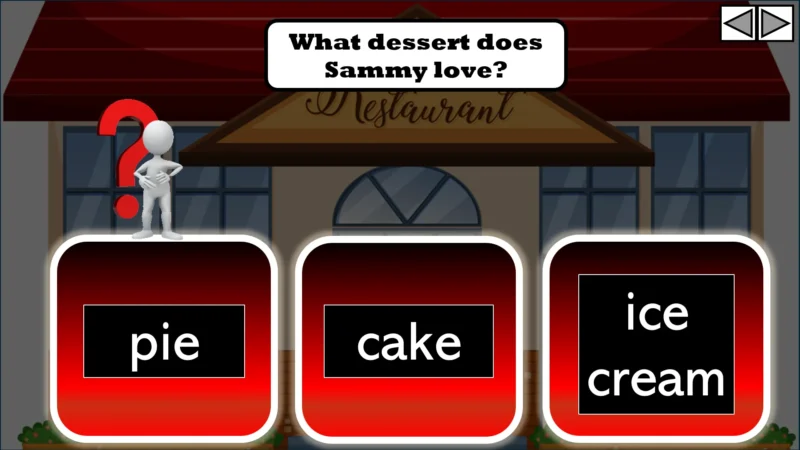
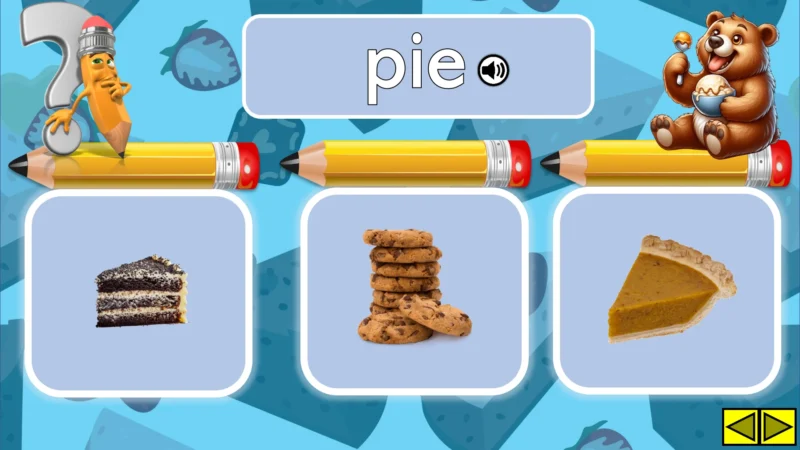
Students learn vocabulary related to drinks and desserts, testing their retention with interactive quizzes and spelling challenges. A picture-based memory game and image identification tasks help students lock in new words while keeping the energy high.
Unit 8
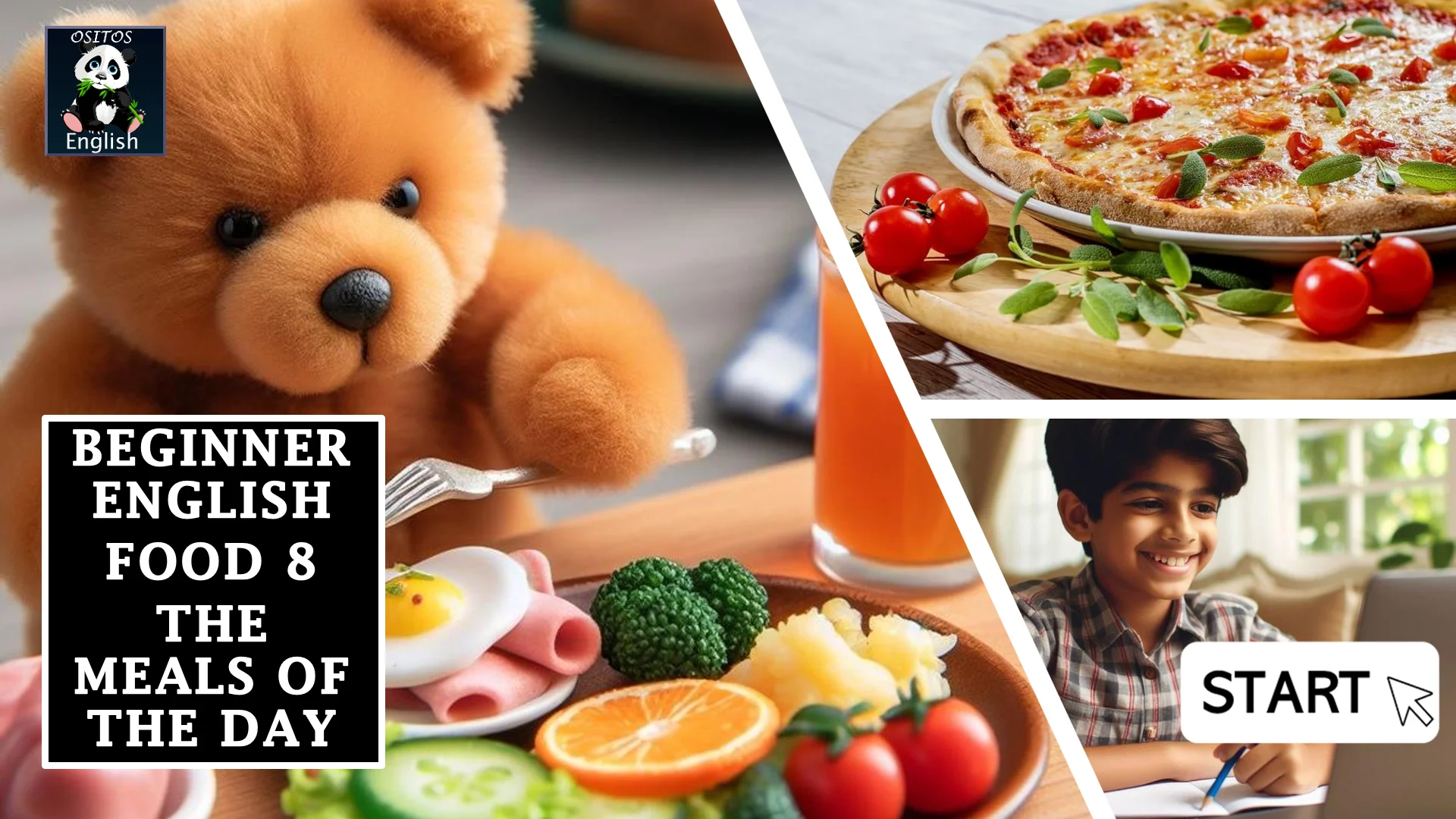
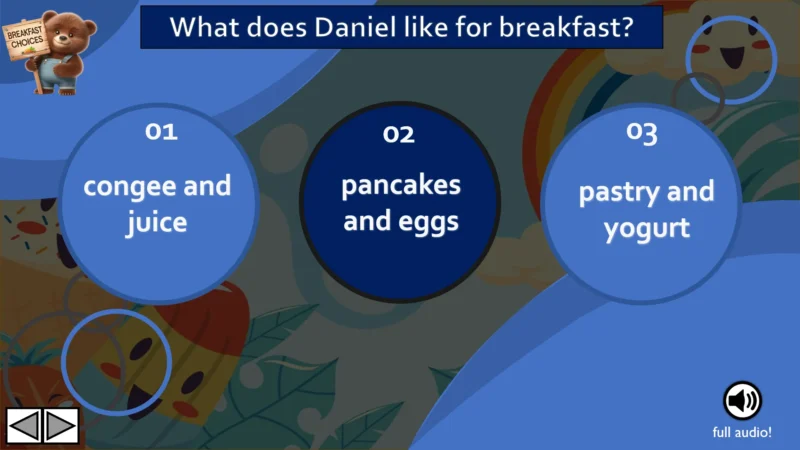
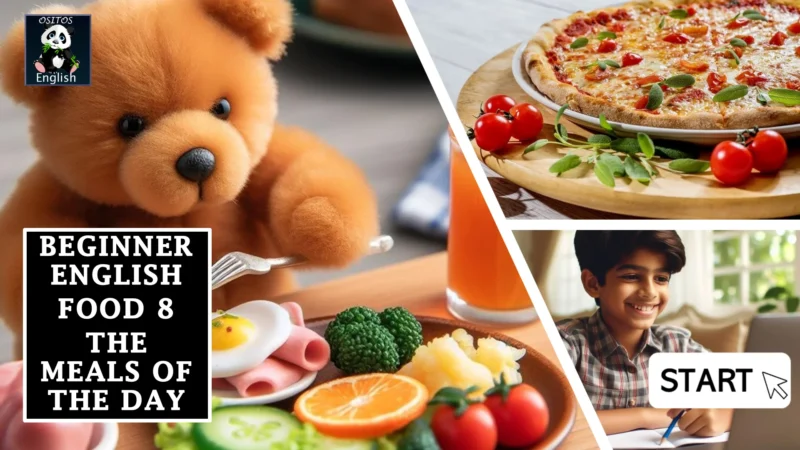
Students learn the three meals of the day—breakfast, lunch, and dinner—while connecting each with the time of day. Vocabulary is reinforced with picture quizzes, and spelling tasks. Conversational questions like “What’s your favorite meal?” Students also meet the helpful word “meal” itself, giving them a broader way to talk about food in English. Finally they will explore various typical breakfast, lunch and dinner meals from around the world and answer what they like to have for these meals.
Unit 9
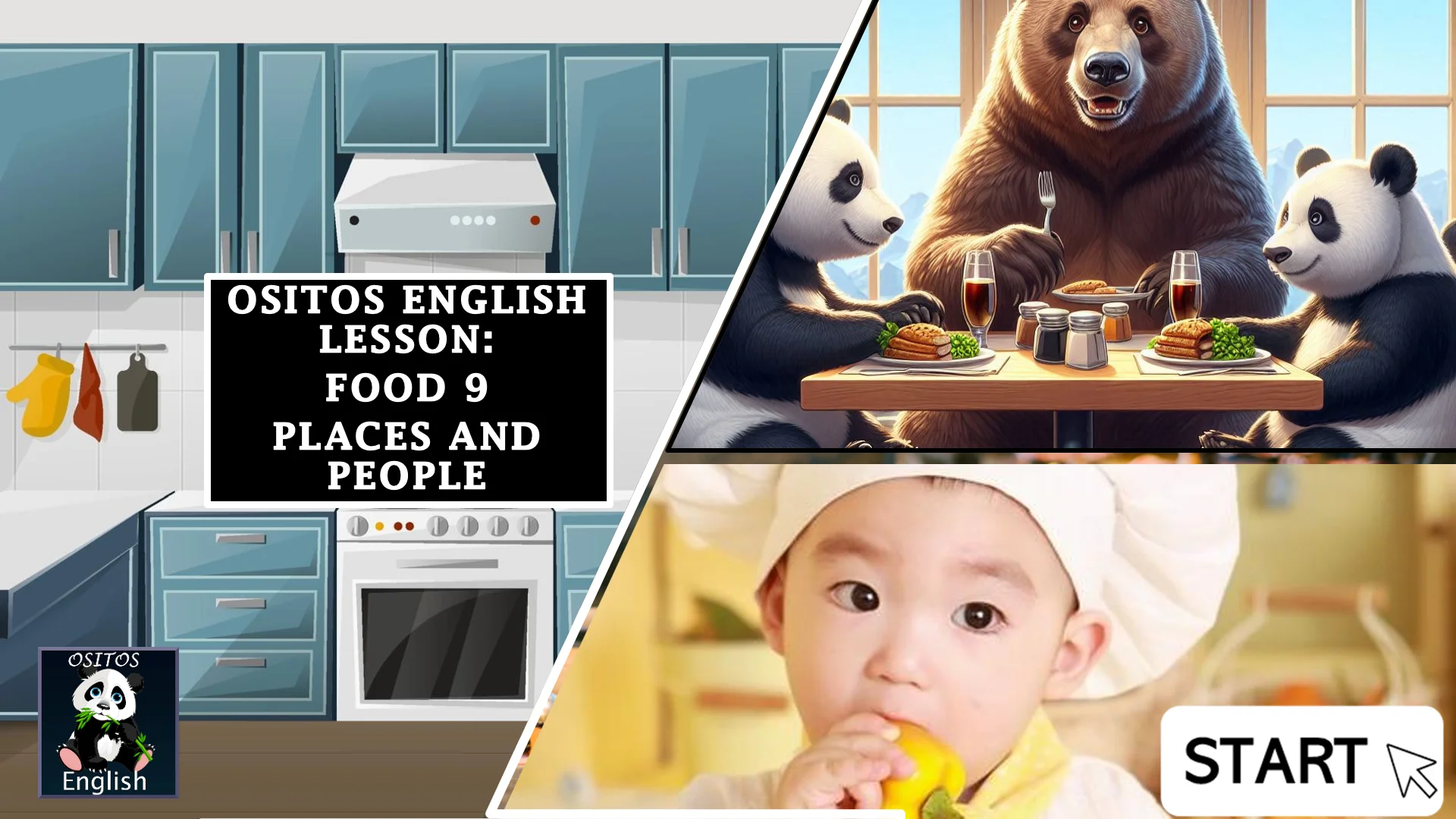
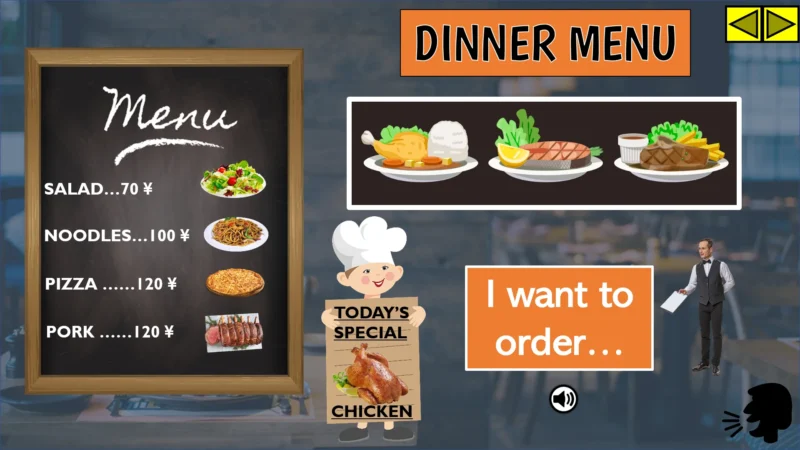
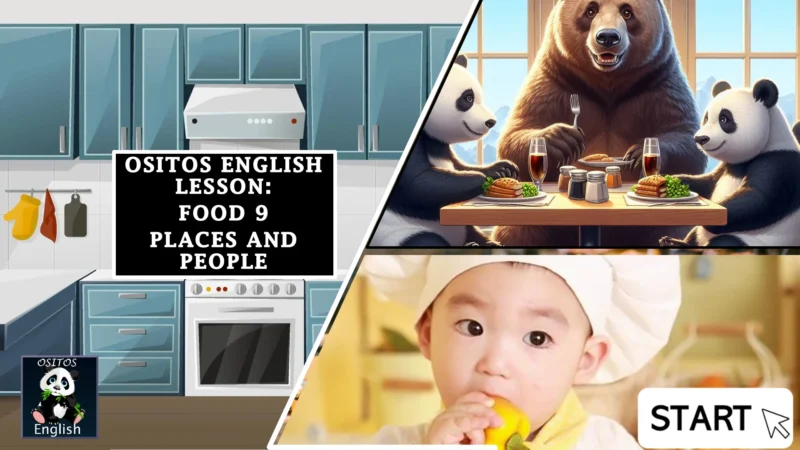
Students explore vocabulary for people and places related to food, such as restaurants and chefs. Engaging games, image quizzes, and spelling practice help learners remember these new words. The unit wraps up with role-play activities where students “order food” from a simple breakfast, lunch, or dinner menu.
Unit 10
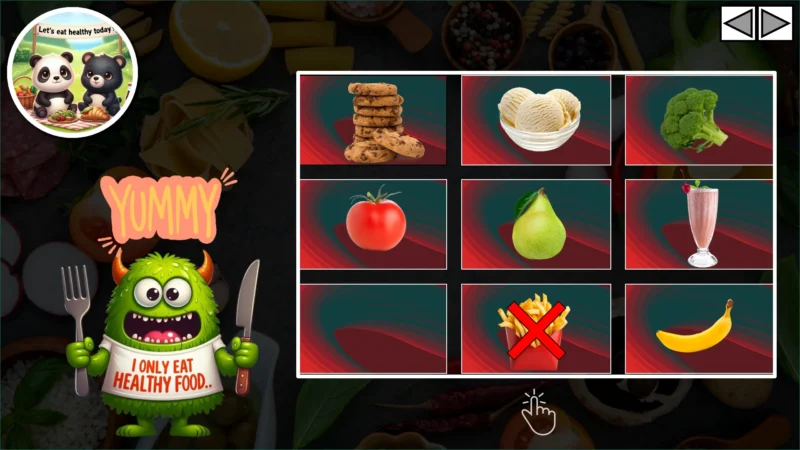
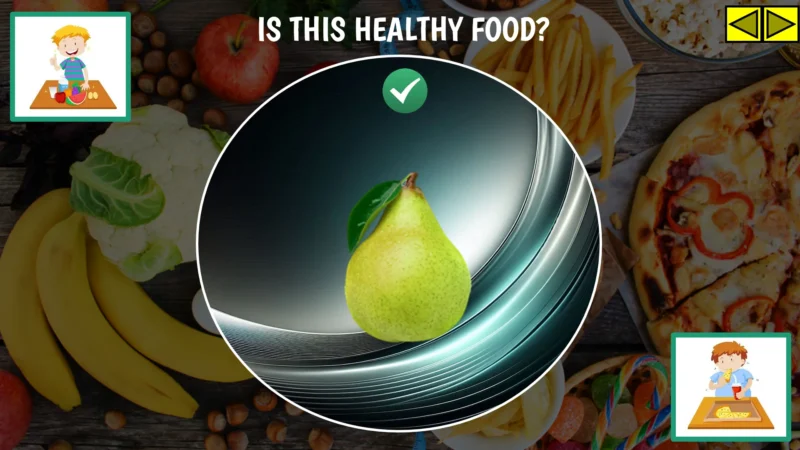
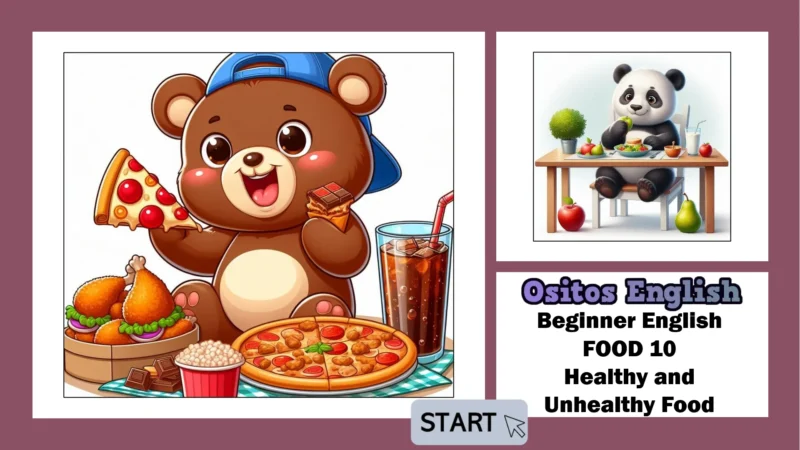
Students learn to identify healthy and unhealthy foods through interactive vocabulary practice, listening activities, and comprehension quizzes. A dialogue between two children reinforces key ideas and helps spark simple discussions about food choices.
Unit 11
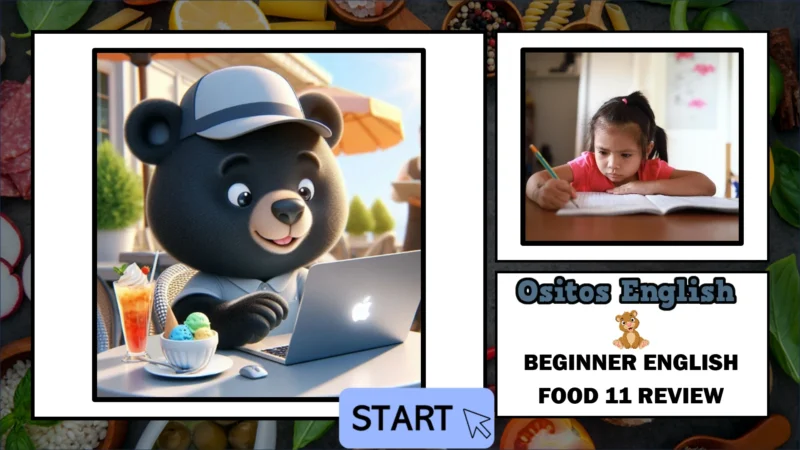
In the final review lesson, students revisit key vocabulary from Units 9–11—including fruit, vegetables, common foods, drinks, desserts, food-related places and people, healthy and unhealthy food, and meals of the day — through quizzes, listening comprehension, and spelling games. Interactive games like “Feed the Monster” and “Wheel of Fortune” keep things playful while reinforcing everything they’ve learned.
Please note: These presentations are optimized for Microsoft PowerPoint. While some free software like WPS Office or PowerPoint Online may support most features, unfortunately full functionality (especially animations and audio) cannot be guaranteed outside the Microsoft Office environment.
The units will be downloaded one at a time. Please contact OsitosEnglish if there an issue with the downloads (BrianHunter@ositosenglish.net)
Reviews
There are no reviews yet.