Lesson Structure

This page explains the structured approach I've recently developed and use in my lessons and lesson design.
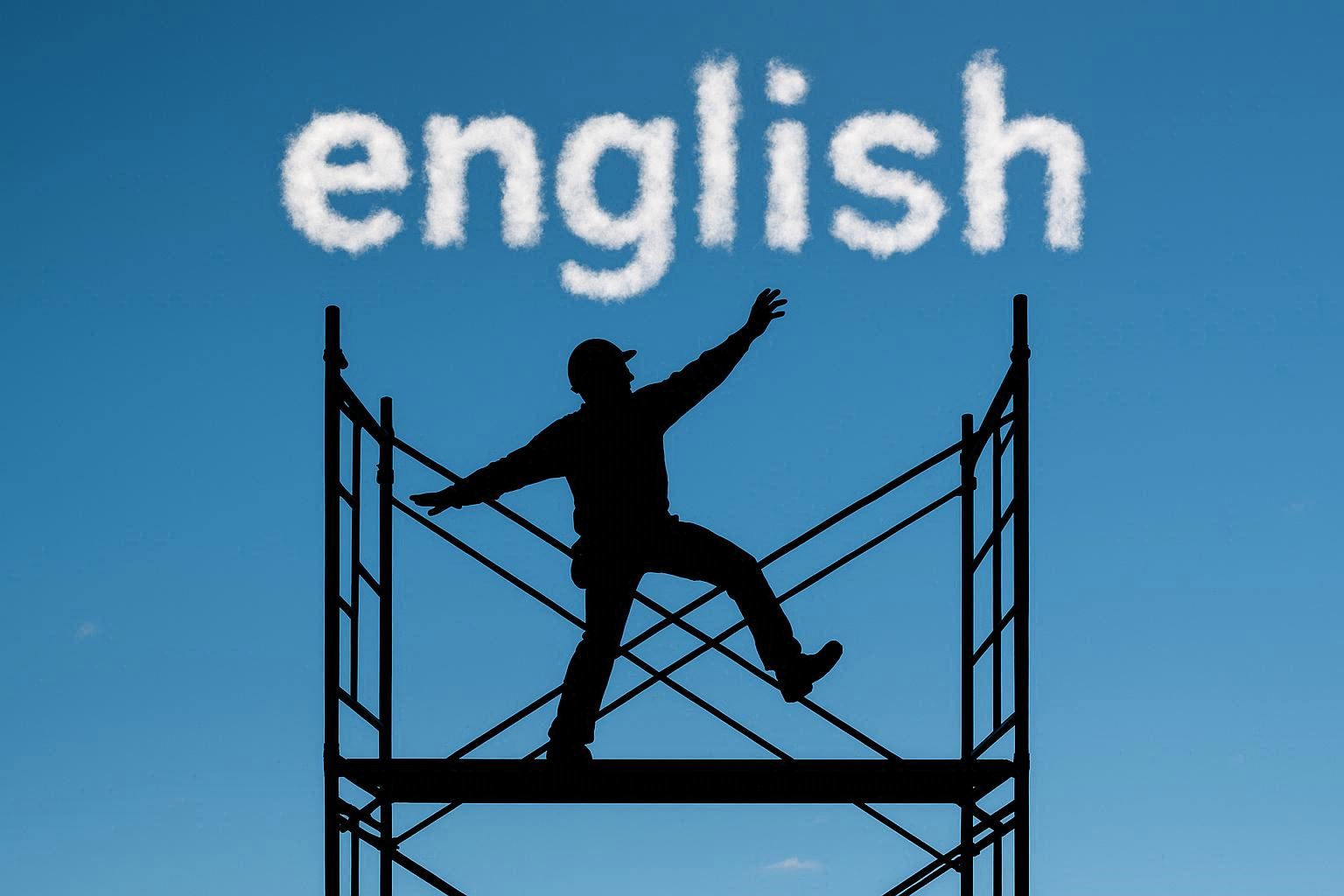
The goal of education, therefore, should be to develop autonomous learners—students who can “learn how to learn”. –James Bruner
I began creating my own lessons shortly after leaving online English platforms and working independently. Over time, I had grown increasingly frustrated with the repetitive and uninspired nature of much of the material availableI felt lessons could be far more engaging, and that engagement was not just a bonus, but a key factor in how effectively students learn.
Over the following years, I built a large library of PowerPoint-based lessons: warm-up activities, grammar-focused slides, and fully interactive main content supported by visuals, sound, and animation. These lessons were tested and refined in real classes, and they consistently held students’ attention. What I lacked, however, was a consistent and reproducible structure.
That began to change about a year ago when I started developing lessons built around short, original stories. With one advanced student, I took on a much more ambitious project: a long-form story set during the time of Simón Bolívar.[link to lesson in shop page to add] In building that lesson, I experimented with sequencing; presenting audio before text, adding comprehension checks, and reinforcing vocabulary at the end of each section. The results were encouraging, but the structure itself was still evolving.
Soon after, I began creating much shorter and simpler stories for beginner students, applying a similar sequence: listen, understand, read, and review. These lessons proved effective not only in maintaining attention, but in strengthening multiple areas of language development at once. It became clear that what I was really searching for was a format that could bring together all the essential components of language learning within a single, coherent lesson.
This repeated, structured exposure helps students develop a much stronger, longer-lasting grasp of the subject.
–Bruner
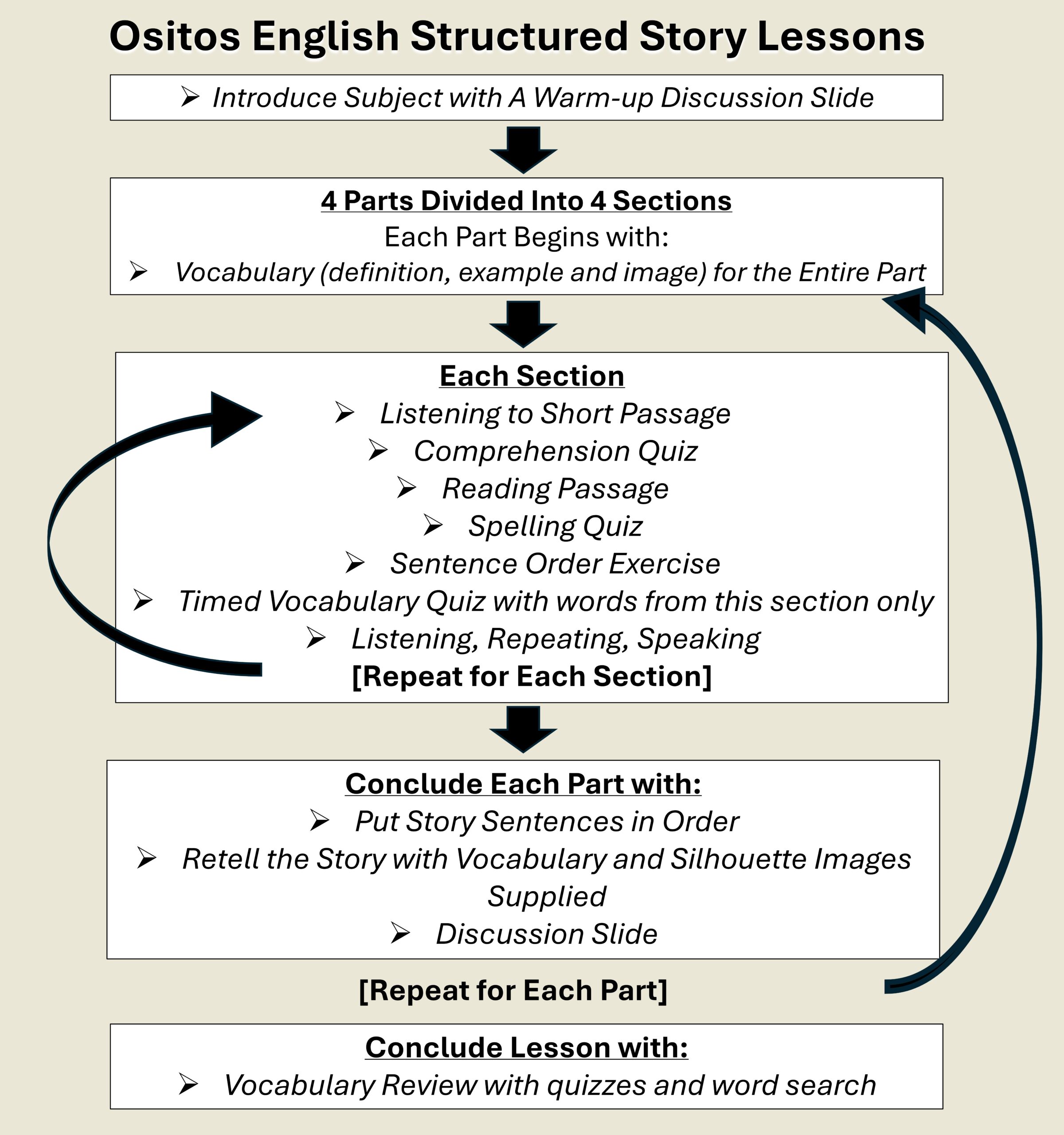
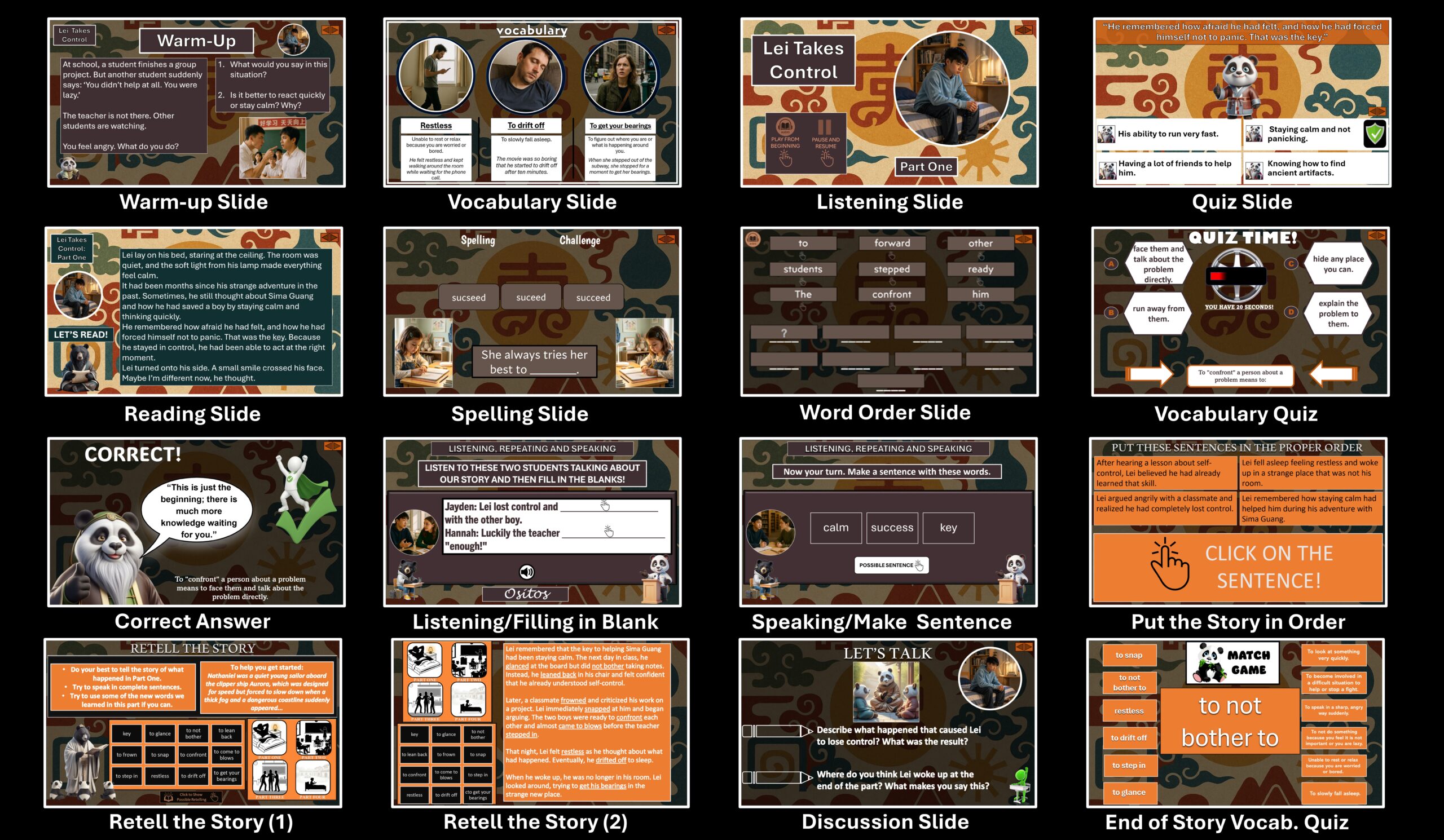
Over time, that structure began to take shape. Stories settled into a manageable length and are typically divided into four parts, each containing four sections. Each part begins with targeted vocabulary, allowing students to encounter key language before entering the story itself. Students then move through a consistent sequence of listening, comprehension, reading, spelling, sentence reconstruction, and guided speaking activities. Vocabulary is continually recycled and reviewed throughout the process, allowing students to encounter the same language in multiple contexts before being asked to use it independently. One of the most important additions came later in the development process. Before students are asked to retell a section of the story independently, they first complete a series of guided speaking activities. These include listening and fill-in-the-blank dialogues, sentence repetition, and short speaking prompts supported by vocabulary. At higher levels, students are also encouraged to vary tone and emotion while speaking, helping them develop greater flexibility and confidence in oral communication.
More recently, I added a story sequencing stage near the end of each part. Students are presented with key events from the story and must place them in the correct order. This serves as a bridge between comprehension and production, helping them organize the narrative before moving on to the most challenging task in the lesson: retelling the story in their own words.
By this point, much of the support has gradually been removed. Students still receive visual cues, key vocabulary, and an opening sentence to help them begin, but they are increasingly expected to rely on their own understanding of the story. In this sense, the retelling stage represents the gradual removal of the scaffold itself, encouraging students to move from guided practice toward more independent language use.
Using stories as the foundation ties everything together. Stories naturally hold attention, but they also provide flexibility, allowing me to draw on a wide range of topics that genuinely interest both me and my students; from history and environmental issues to sports, food, and everyday life. This makes it possible to create lessons that are structured and effective, while still appealing to the student. It also allows for an almost unlimited range of future lesson topics.
The storytelling format also makes it possible to control pacing very carefully. Information is introduced in stages rather than all at once, helping students focus on one task at a time while reducing cognitive overload. Visual reveals, embedded audio, animation, and interactive elements are used not simply for entertainment, but to guide attention and support comprehension throughout the lesson.
At the same time, I continue refining the presentation and interaction design of the lessons themselves. I feel the use of visuals, animation, sound effects, and interactive elements can play a vital role in keeping my students focused. Six years after feeling frustrated with traditional worksheets and static presentations I believe these carefully designed slides, varied formats, and consistent visual styles are the type of dynamic and immersive material that I craved back then.
As this process developed, I learned that the underlying structure had a clear connection to an established concept in education. This approach is often described as scaffolding: a method in which learning is broken into manageable steps, with support provided as students build understanding and gradually reduced as they gain confidence.
The term was introduced in the 1970s by psychologist Jerome Bruner, building on earlier work by Lev Vygotsky on the “zone of proximal development”—the idea that students learn best when working just beyond their current level, with appropriate guidance. In practice, scaffolding involves guiding students through a sequence of tasks, helping them develop new skills step by step until they are able to use them independently. In my own lessons, this often means moving students through multiple stages of exposure to the same language: first hearing it, then recognizing it, then reconstructing it, and finally using it more independently in speech.
At its core, this approach supports the development of real, usable English. While it continually challenges the student, it never goes beyond what they can reasonably grasp. Each part of the lesson connects to the next, and over time students gain both confidence and independence in their ability to communicate, with a much larger vocabulary as an additional benefit.
With the overall structure now firmly established, I am increasingly able to focus on refining atmosphere, pacing, speaking development, and the overall learning experience itself. After years of experimentation, the lessons have gradually evolved into a flexible system that can continue expanding across different levels, topics, and styles of storytelling.
Del experimento a la estructura: cómo desarrollé mi enfoque de andamiaje
Comencé a crear mis propias lecciones poco después de dejar las plataformas de enseñanza de inglés en línea y empezar a trabajar de forma independiente. Con el tiempo, me había sentido cada vez más frustrado por la naturaleza repetitiva y poco inspiradora de gran parte del material disponible. Creía que las lecciones podían ser mucho más atractivas, y que la participación de los estudiantes no era simplemente un beneficio adicional, sino un factor clave en la eficacia del aprendizaje.
Durante los años siguientes, desarrollé una amplia biblioteca de lecciones basadas en PowerPoint: actividades de calentamiento, diapositivas centradas en la gramática y contenido principal totalmente interactivo respaldado por imágenes, sonido y animación. Estas lecciones fueron probadas y perfeccionadas en clases reales, y de manera constante lograban mantener la atención de los estudiantes. Sin embargo, lo que me faltaba era una estructura coherente y fácil de reproducir.
Eso comenzó a cambiar hace aproximadamente un año, cuando empecé a desarrollar lecciones basadas en historias cortas originales. Con un estudiante avanzado, emprendí un proyecto mucho más ambicioso: una historia extensa ambientada en la época de Simón Bolívar. [Enlace a la lección en la tienda] Al crear esa lección, experimenté con la secuencia de aprendizaje: presentar el audio antes del texto, añadir comprobaciones de comprensión y reforzar el vocabulario al final de cada sección. Los resultados fueron alentadores, pero la estructura aún seguía evolucionando.
Poco después, comencé a crear historias mucho más cortas y sencillas para estudiantes principiantes, aplicando una secuencia similar: escuchar, comprender, leer y repasar. Estas lecciones demostraron ser eficaces no solo para mantener la atención, sino también para fortalecer simultáneamente múltiples áreas del desarrollo del idioma. Quedó claro que lo que realmente estaba buscando era un formato capaz de reunir todos los componentes esenciales del aprendizaje de idiomas dentro de una sola lección coherente.
Por lo tanto, el objetivo de la educación debería ser formar alumnos autónomos, es decir, estudiantes que sean capaces de ‘aprender a aprender.’ –James Bruner
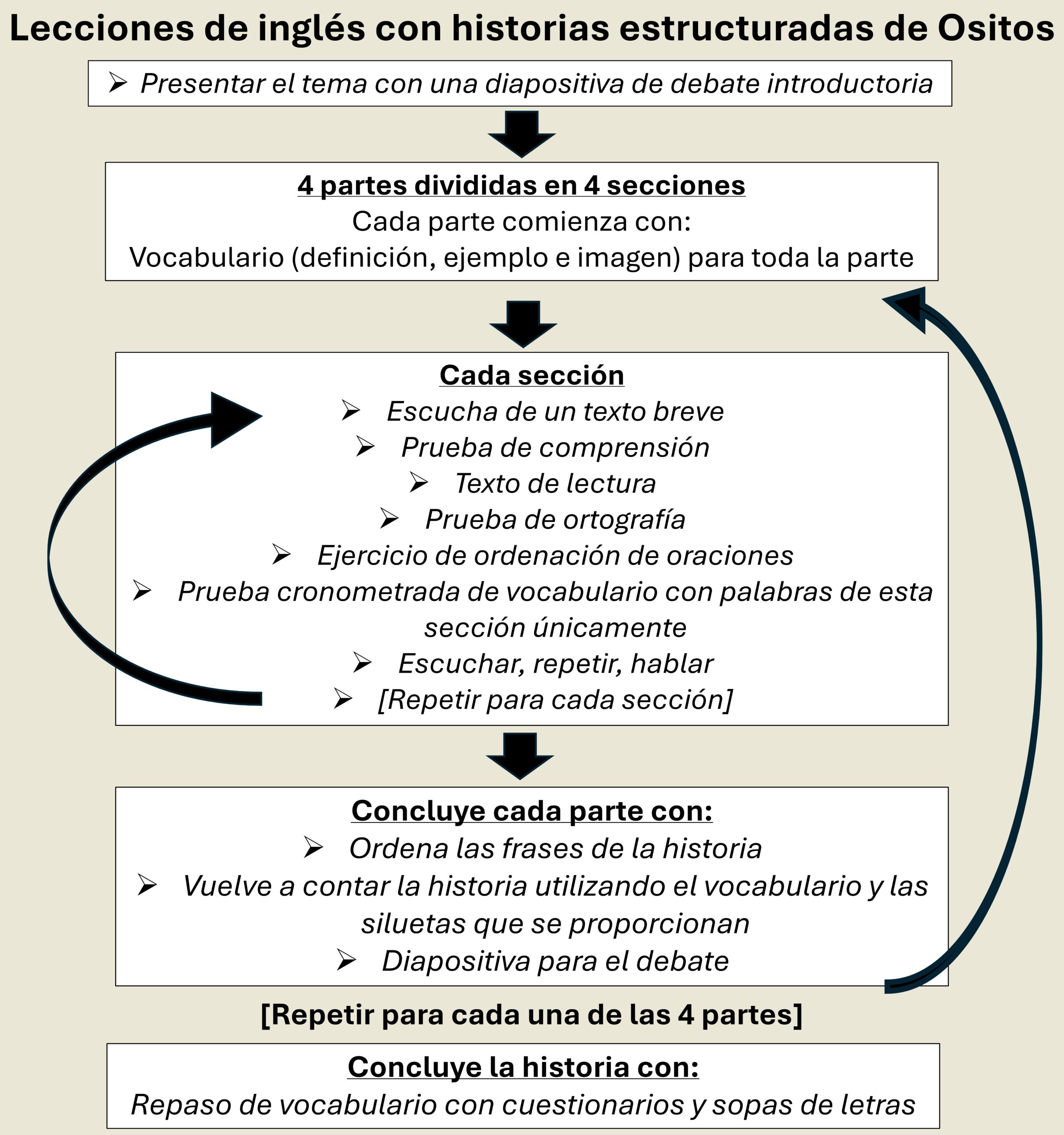
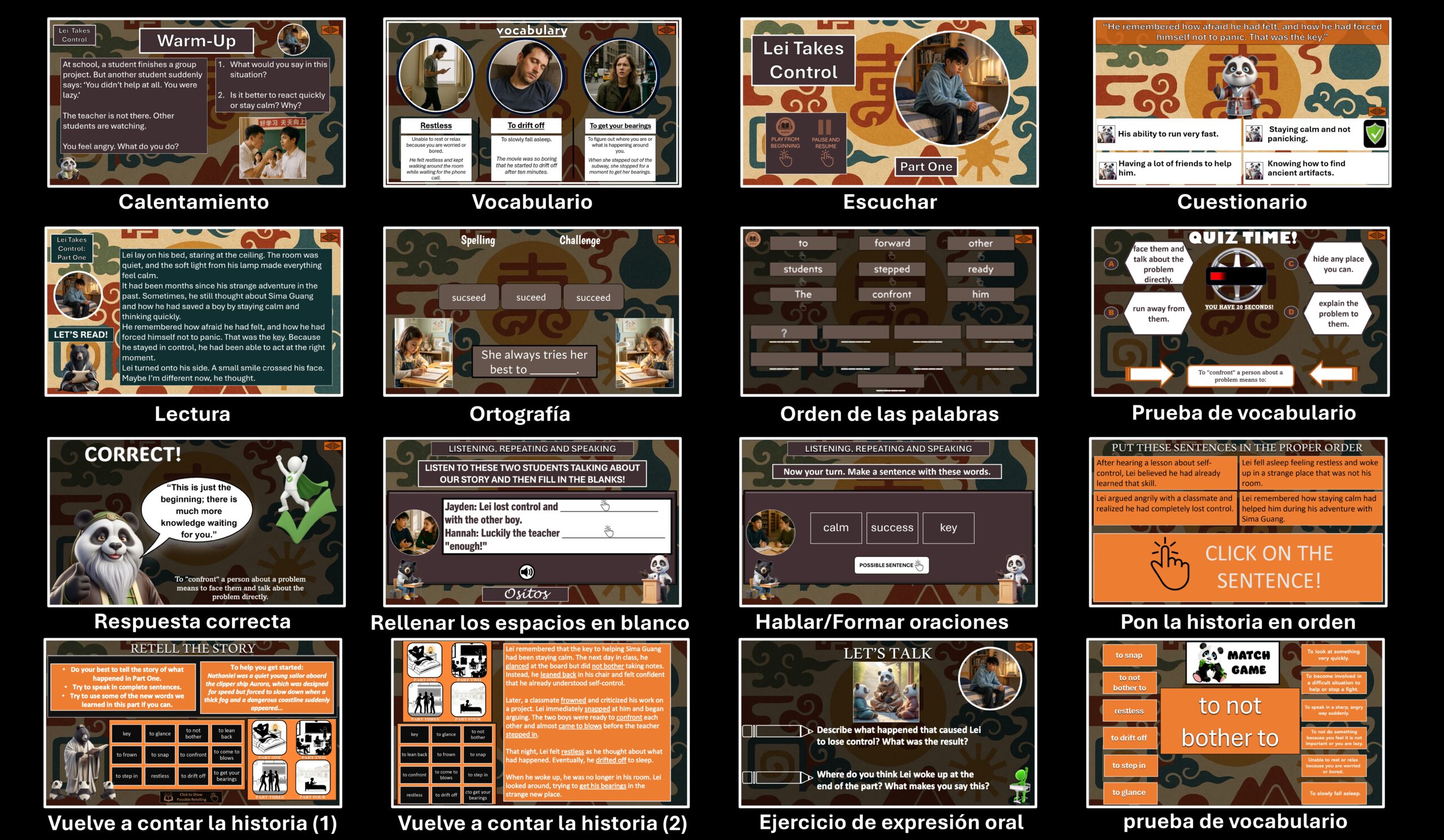
Con el tiempo, esa estructura comenzó a tomar forma. Las historias alcanzaron una extensión manejable y normalmente se dividen en cuatro partes, cada una compuesta por cuatro secciones. Cada parte comienza con vocabulario específico, lo que permite a los estudiantes familiarizarse con el lenguaje clave antes de adentrarse en la historia. Luego avanzan a través de una secuencia constante de actividades de escucha, comprensión, lectura, ortografía, reconstrucción de oraciones y expresión oral guiada. El vocabulario se recicla y repasa continuamente durante todo el proceso, permitiendo que los estudiantes encuentren las mismas palabras en múltiples contextos antes de utilizarlas de manera independiente.
Una de las incorporaciones más importantes llegó más adelante en el proceso de desarrollo. Antes de pedirles a los estudiantes que vuelvan a contar una sección de la historia por sí solos, primero completan una serie de actividades de expresión oral guiada. Estas incluyen diálogos de escucha con espacios para completar, repetición de oraciones y breves ejercicios de conversación apoyados por vocabulario. En los niveles más avanzados, también se anima a los estudiantes a variar el tono y la emoción al hablar, ayudándolos a desarrollar una mayor flexibilidad y confianza en la comunicación oral.
Más recientemente, añadí una etapa de secuenciación de la historia cerca del final de cada parte. Los estudiantes reciben los acontecimientos principales de la historia y deben colocarlos en el orden correcto. Esto sirve como un puente entre la comprensión y la producción, ayudándolos a organizar la narrativa antes de pasar a la tarea más desafiante de la lección: volver a contar la historia con sus propias palabras.
Para este momento, gran parte del apoyo ya se ha retirado gradualmente. Los estudiantes todavía reciben pistas visuales, vocabulario clave y una oración inicial para ayudarlos a comenzar, pero cada vez dependen más de su propia comprensión de la historia. En este sentido, la etapa de narración representa la eliminación gradual del propio andamiaje pedagógico, animando a los estudiantes a pasar de la práctica guiada hacia un uso más independiente del idioma.
Utilizar historias como base une todos los componentes del proceso. Las historias captan naturalmente la atención, pero también ofrecen flexibilidad, permitiéndome recurrir a una amplia variedad de temas que realmente interesan tanto a mis estudiantes como a mí: desde la historia y las cuestiones medioambientales hasta los deportes, la comida y la vida cotidiana. Esto hace posible crear lecciones estructuradas y eficaces sin dejar de resultar atractivas para el estudiante. Además, permite disponer de una gama prácticamente ilimitada de temas para futuras lecciones.
El formato narrativo también permite controlar el ritmo de aprendizaje con gran precisión. La información se presenta por etapas en lugar de ofrecerse toda de una vez, ayudando a los estudiantes a concentrarse en una tarea cada vez y reduciendo la sobrecarga cognitiva. Las revelaciones visuales, el audio integrado, las animaciones y los elementos interactivos no se utilizan simplemente como entretenimiento, sino como herramientas para dirigir la atención y apoyar la comprensión durante toda la lección.
Al mismo tiempo, continúo perfeccionando el diseño de presentación e interacción de las propias lecciones. Considero que el uso de imágenes, animaciones, efectos de sonido y elementos interactivos puede desempeñar un papel fundamental para mantener la concentración de mis estudiantes. Seis años después de sentirme frustrado con las hojas de trabajo tradicionales y las presentaciones estáticas, creo que estas diapositivas cuidadosamente diseñadas, los formatos variados y los estilos visuales coherentes representan exactamente el tipo de material dinámico e inmersivo que tanto deseaba en aquel entonces.
A medida que este proceso fue evolucionando, descubrí que la estructura subyacente tenía una clara conexión con un concepto bien establecido en el ámbito educativo. Este enfoque suele describirse como andamiaje pedagógico (scaffolding): un método en el que el aprendizaje se divide en pasos manejables, proporcionando apoyo mientras los estudiantes desarrollan su comprensión y reduciéndolo gradualmente a medida que adquieren confianza.
El término fue introducido en la década de 1970 por el psicólogo Jerome Bruner, basándose en trabajos anteriores de Lev Vygotsky sobre la “zona de desarrollo próximo”, la idea de que los estudiantes aprenden mejor cuando trabajan ligeramente por encima de su nivel actual con la orientación adecuada. En la práctica, el andamiaje consiste en guiar a los estudiantes a través de una secuencia de tareas, ayudándolos a desarrollar nuevas habilidades paso a paso hasta que puedan utilizarlas de forma independiente. En mis propias lecciones, esto suele significar exponer a los estudiantes al mismo lenguaje en múltiples etapas: primero escuchándolo, luego reconociéndolo, después reconstruyéndolo y, finalmente, utilizándolo de manera más independiente al hablar.
En esencia, este enfoque favorece el desarrollo de un inglés real y funcional. Aunque desafía continuamente al estudiante, nunca va más allá de lo que puede comprender razonablemente. Cada parte de la lección se conecta con la siguiente y, con el tiempo, los estudiantes desarrollan tanto confianza como autonomía en su capacidad para comunicarse, con un vocabulario mucho más amplio como beneficio adicional.
Ahora que la estructura general está firmemente establecida, puedo centrarme cada vez más en perfeccionar la atmósfera de las lecciones, el ritmo de aprendizaje, el desarrollo de la expresión oral y la experiencia educativa en su conjunto. Tras años de experimentación, las lecciones han evolucionado gradualmente hasta convertirse en un sistema flexible que puede seguir ampliándose a través de diferentes niveles, temas y estilos narrativos.
从实验到框架:我是如何构建我的“脚手架”方法的
因此,教育的目标应当是培养具有自主学习能力的学生——即那些能够“学会如何学习”的学生 . –James Bruner
离开在线英语教学平台并开始独立教学后不久,我便开始设计自己的课程。随着时间的推移,我对许多现有教材重复、缺乏创意的特点越来越感到失望。我认为课程完全可以设计得更加生动有趣,而学生的投入度不仅仅是一种额外的优势,更是决定学习效果的重要因素。
在接下来的几年里,我建立了一个庞大的 PowerPoint 课程库,其中包括热身活动、语法教学幻灯片,以及结合图片、声音和动画的高度互动式核心内容。这些课程都经过了真实课堂的测试和不断改进,并且始终能够有效吸引学生的注意力。然而,我始终缺少一种稳定且能够重复运用的课程结构。
大约一年前,这种情况开始发生改变。当时我开始开发以原创短篇故事为核心的课程。与一位高级水平学生合作时,我尝试了一个更加宏大的项目:一部以西蒙·玻利瓦尔时代为背景的长篇故事课程。[在此添加商店页面课程链接] 在设计这套课程的过程中,我尝试调整教学顺序——先播放音频,再呈现文本;加入理解检测环节;并在每个部分结束时强化词汇学习。结果令人鼓舞,但课程结构本身仍在不断完善之中。
不久之后,我开始为初学者创作更加简短、更加简单的故事,并采用类似的教学流程:听、理解、阅读和复习。这些课程不仅能够有效保持学生的专注力,还能够同时促进语言能力多个方面的发展。我逐渐意识到,自己真正寻找的,其实是一种能够将语言学习所有核心要素整合到同一堂连贯课程中的教学模式。
这种反复、有条理的学习方式有助于学生对该学科形成更扎实、更持久的掌握。- –Bruner.
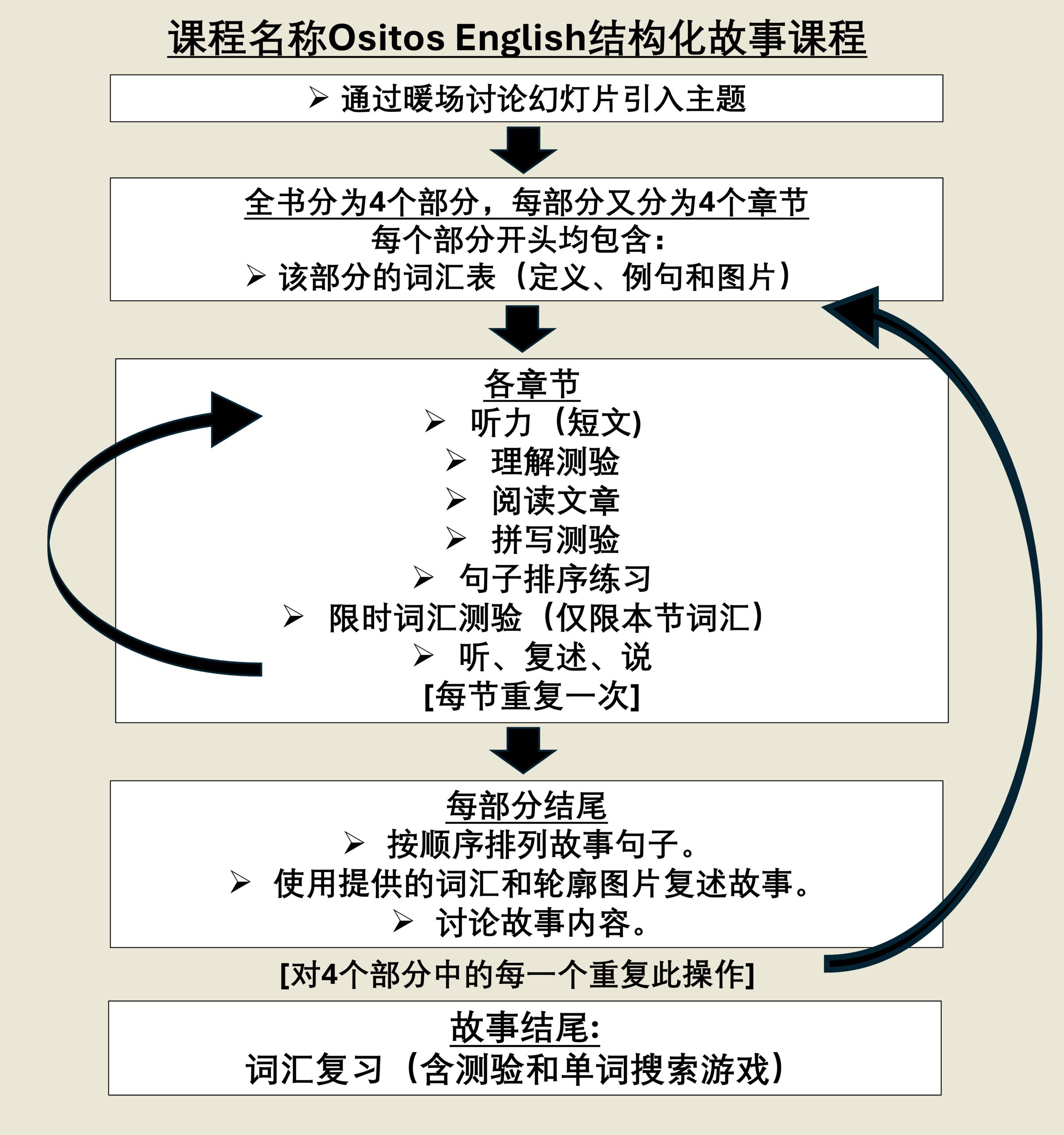
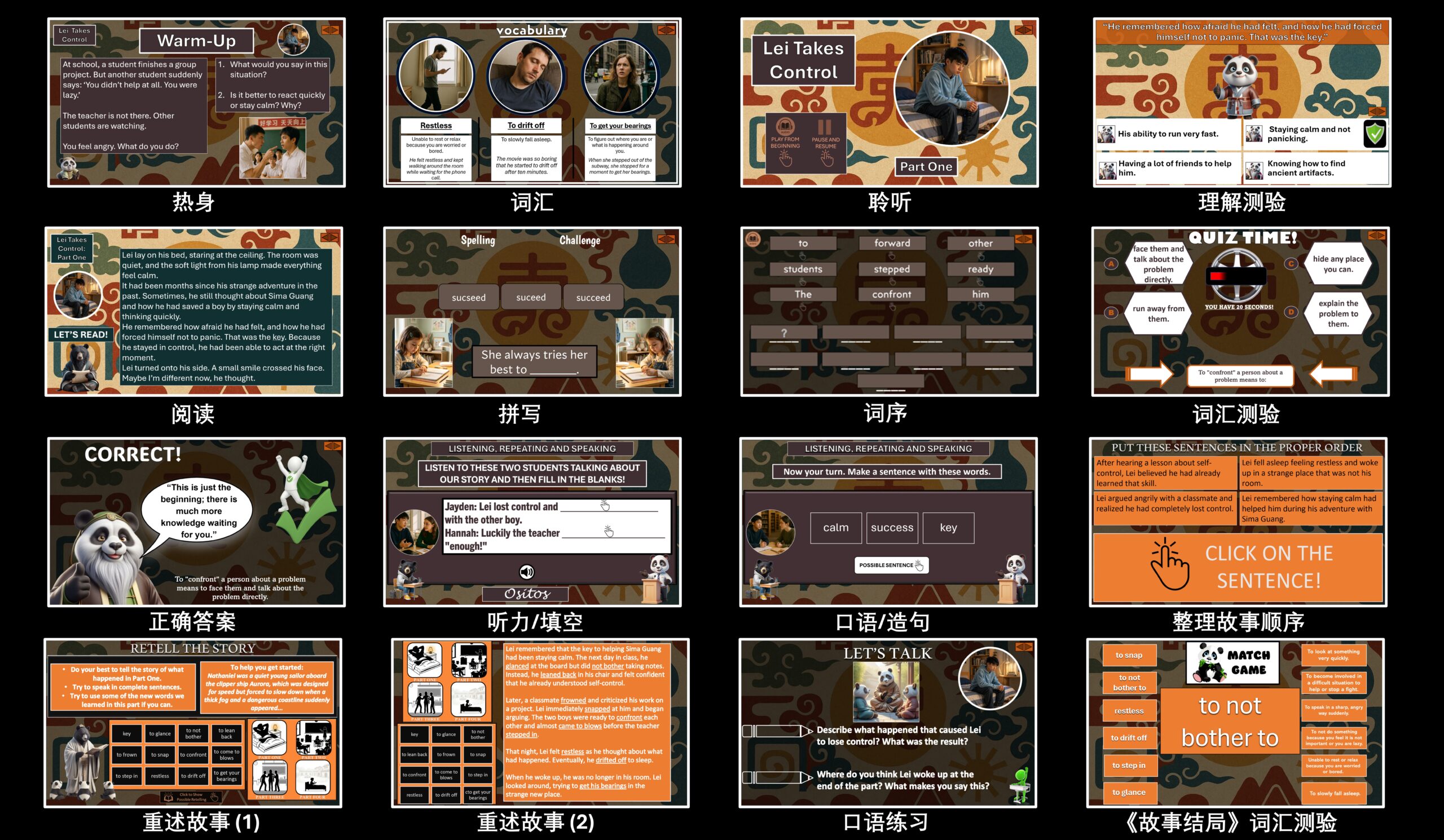
随着时间的推移,这种课程结构逐渐成形。故事的长度被控制在一个易于管理的范围内,通常被划分为四个部分,每个部分又包含四个小节。每个部分都以重点词汇学习开始,让学生在进入故事内容之前先接触核心语言。随后,学生按照固定的学习流程进行:听力、理解检测、阅读、拼写练习、句子重组以及引导式口语活动。词汇会在整个过程中不断重复和复习,使学生能够在不同语境中多次接触同样的语言内容,然后再尝试独立运用。
课程开发过程中最重要的改进之一是在后期加入的。在要求学生独立复述故事内容之前,他们会先完成一系列引导式口语活动。这些活动包括听力填空对话、句子跟读以及以词汇为支撑的简短口语练习。在更高水平的课程中,我还会鼓励学生在说话时尝试不同的语气和情感表达,从而帮助他们提高口语表达的灵活性和自信心。
最近,我又在每个部分接近结尾的位置增加了故事排序环节。学生需要根据故事中的关键事件,将它们排列成正确的顺序。这一环节充当了理解与输出之间的桥梁,帮助学生在进入课程中最具挑战性的任务——用自己的语言复述故事——之前,先整理和组织故事情节。
到了这一阶段,大部分辅助支持已经被逐步移除。学生仍然会获得图片提示、关键词汇以及一个开头句作为帮助,但他们越来越需要依靠自己对故事的理解来完成任务。从这个角度来看,复述环节本身正是逐步拆除“脚手架”的过程,引导学生从有指导的练习过渡到更加独立的语言运用。
以故事作为课程基础能够将所有学习环节有机地结合起来。故事天然具有吸引注意力的优势,同时也赋予课程极大的灵活性,使我能够围绕各种真正让我和学生感兴趣的主题进行创作——从历史和环境问题,到体育、美食以及日常生活。这不仅使课程既结构清晰又富有成效,同时也能够保持对学生的吸引力。此外,这种形式还为未来课程提供了几乎无限的选题空间。
故事教学模式还使我能够非常精细地控制学习节奏。信息被分阶段呈现,而不是一次性全部展示,从而帮助学生专注于当前任务,同时减少认知负担。渐进式视觉展示、嵌入式音频、动画效果以及互动元素的使用,并不仅仅是为了增加趣味性,而是为了引导学生的注意力并支持他们对内容的理解。
与此同时,我也在不断优化课程本身的展示和互动设计。我认为,图片、动画、音效以及互动元素的运用,对于帮助学生保持专注具有非常重要的作用。六年前,当我对传统练习册和静态演示文稿感到失望时,我一直希望能够拥有一种更具活力和沉浸感的教学材料。而如今,我相信这些经过精心设计的幻灯片、多样化的活动形式以及统一的视觉风格,正是我当时一直在寻找的那种课程资源。
随着这一过程不断发展,我逐渐意识到,这套课程结构与教育学中的一个成熟理论有着明显的联系。这种方法通常被称为脚手架教学法(Scaffolding):一种将学习内容分解为可管理步骤的教学方式,在学生建立理解的过程中提供支持,并随着他们信心的增强逐步减少帮助。
这一概念由心理学家杰罗姆·布鲁纳(Jerome Bruner)于20世纪70年代提出,其理论基础来源于列夫·维果茨基(Lev Vygotsky)关于“最近发展区”(Zone of Proximal Development)的研究。该理论认为,当学生在适当指导下学习略高于自身当前水平的内容时,学习效果最佳。在实际教学中,脚手架教学法通过一系列循序渐进的任务来引导学生,帮助他们逐步掌握新技能,直到能够独立运用。在我的课程中,这通常意味着让学生经历同一种语言的多个学习阶段:先听到它,然后识别它,再重建它,最后在口语中更加独立地使用它。
从本质上来说,这种方法有助于培养真正能够实际运用的英语能力。虽然它会持续给学生带来挑战,但始终不会超出他们合理能够理解的范围。课程中的每一个环节都与下一个环节紧密相连。随着时间推移,学生不仅能够建立更强的沟通自信和独立运用语言的能力,同时还能积累更丰富的词汇量。
如今,整体课程结构已经基本成熟,因此我能够将更多精力投入到优化课堂氛围、学习节奏、口语能力培养以及整体学习体验之中。经过多年的不断尝试和改进,这些课程逐渐发展成为一个灵活的教学体系,能够持续扩展到不同水平、不同主题以及各种类型的故事课程之中。